
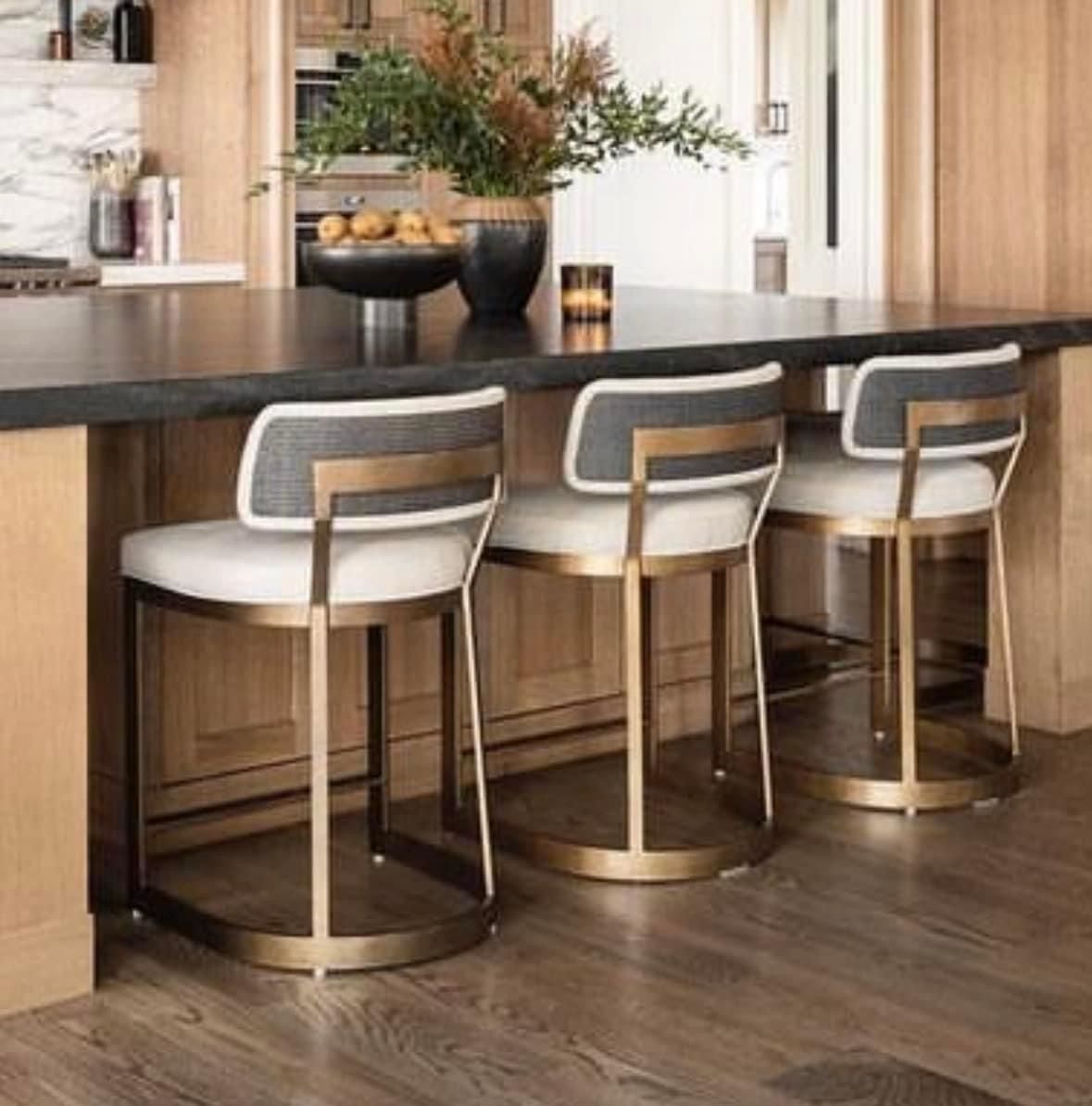
A kitchen stool can look perfectly suited to a bench and still feel uncomfortable once someone sits down. The problem is often not the design but the relationship between seat height, counter height and available legroom. When selecting kitchen stools in Melbourne, taking a few measurements before considering colours, materials or shapes can prevent an attractive choice from becoming awkward in everyday use.
Measure the Counter Before Looking at Stool Styles
Counter height should be the starting point because kitchen benches and islands are not always built to identical dimensions. Measuring from the floor to the underside and top of the benchtop provides a useful reference when comparing stool heights.
Pay particular attention to the seat height rather than the stool’s overall height. A high-backed stool may appear much taller than a backless design even when their actual seating positions are similar.
For kitchen islands with different levels, measure the section where the stools will actually sit instead of assuming the entire surface is the same height.
Allow Comfortable Space Between Seat and Benchtop
Enough vertical space is needed between the stool seat and the underside of the counter. Too little clearance can restrict leg movement, while excessive space may leave the user sitting lower than is comfortable for eating or working at the bench.
The appropriate gap also depends on the construction underneath the benchtop. Thick surfaces, drawers, support rails and structural framing can reduce usable knee space even when the countertop itself appears high enough.
Calculate How Many Stools Will Actually Fit
Fitting more stools along a bench does not necessarily create better seating. Each person needs enough room to sit, move their arms and get on or off the stool without constantly bumping the person beside them.
Before deciding on quantity:
- Measure the usable length of the counter.
- Check the width of each stool at its widest point.
- Leave practical space between neighbouring seats.
- Consider whether stool legs extend beyond the seat.
- Keep the ends of the counter accessible where possible.
Fewer properly spaced stools can often make the kitchen easier to use than several tightly arranged seats.
Backrest or Backless Changes How the Space Functions
Backless stools can usually slide further beneath a counter, helping maintain clear walkways when they are not being used. This can be particularly useful where the kitchen connects directly with a dining or living area.
A backrest provides additional support but remains more visually and physically prominent. The decision should therefore consider how long people normally sit at the counter and how much surrounding space is available.
Footrests Matter More Than They Appear To
When a stool is elevated, feet may not reach the floor. A well-positioned footrest gives the user somewhere natural to support their feet and can make longer periods of sitting more comfortable.
Its position should suit the seat height without forcing the knees upwards. The footrest should also feel stable because it may regularly be used when getting onto or leaving the stool.
Swivel Designs Need Additional Clearance
A swivel seat introduces movement that fixed stools do not require. Nearby walls, cabinets, appliances and other stools can restrict that movement.
Consider the full turning area rather than measuring only the stool’s stationary footprint. Armrests and wide backrests can require particularly careful spacing because they may extend into surrounding areas as the seat rotates.
Match Materials to Kitchen Conditions
Kitchen seating is regularly exposed to food, drinks, frequent handling and general household activity. Material selection should therefore reflect how the kitchen is actually used.
Smooth surfaces may be easier to wipe after everyday spills, while upholstered seating can require more attention when exposed to food and moisture. Households with children may place greater importance on straightforward cleaning, whereas occasional seating may allow more flexibility in material choice.
Getting the Measurements Right
Good kitchen seating depends on several measurements working together rather than one dimension in isolation. Counter height, seat height, spacing, legroom and movement all influence whether stools remain comfortable and practical after the initial selection. Choosing kitchen stools in Melbourne with these factors already established makes it easier to find seating that fits naturally into both the kitchen layout and everyday household routines.